Aufguss vs traditional sauna is a question most people only ask themselves after a handful of visits to one of the two. You sit in the heat, you sweat, you come out, and somewhere on the way home it occurs to you that the experience felt different from what you had expected. Both formats use heat, and both send you home calmer than you arrived. The difference is not the temperature and it is not the size of the room. It comes down to who is running the session and what the hour is shaped like.
At Pure Heat Club the split is easy to describe. A traditional sauna asks you to manage everything yourself, from the moment you step in to the moment you decide to leave. A guided Aufguss session hands the timing, the heat and the cold to a facilitator and turns the visit into three rounds of sauna and cold plunge inside a session of around 75 minutes. What follows is a plain look at what changes between the two, what stays the same, which format tends to suit which person, and what first-timers usually want to know before they book.
The Short Answer
In a traditional sauna you run the session. You decide when to go in, you decide how long to stay, and the room simply holds a steady heat for as long as you want it. In Aufguss a trained facilitator takes over. Water infused with essential oils is poured over the hot stones, the burst of aromatic steam is moved through the room with towels, the rounds are timed, and music and scent shape the atmosphere. The cold plunge sits between rounds as part of the structure rather than as something you add at the end if you feel like it.
That shift from self-managed to facilitated explains nearly every other difference between the formats. The heat arrives in waves instead of sitting still, the clock stops being your problem, the cold is built into the hour, and the room moves together. Anyone comparing Aufguss vs traditional sauna is really comparing two different ways of spending the same hour in the heat, and the gap between them is wider than most people expect.
Where Aufguss Comes From
Aufguss is a German word and it means a pour or an infusion. The practice grew out of sauna traditions in northern and central Europe, where pouring water over hot stones developed from a simple habit into a craft with its own technique, timing and sense of theatre. In Germany it is taken seriously enough that the national sauna association runs a German Aufguss championship every year, with judges scoring heat distribution, towel work and the use of oils. In Finland the Finnish Sauna Society has been documenting and protecting sauna culture since 1937, and the ritual of water meeting hot stones is older than any of the bodies that now look after it.
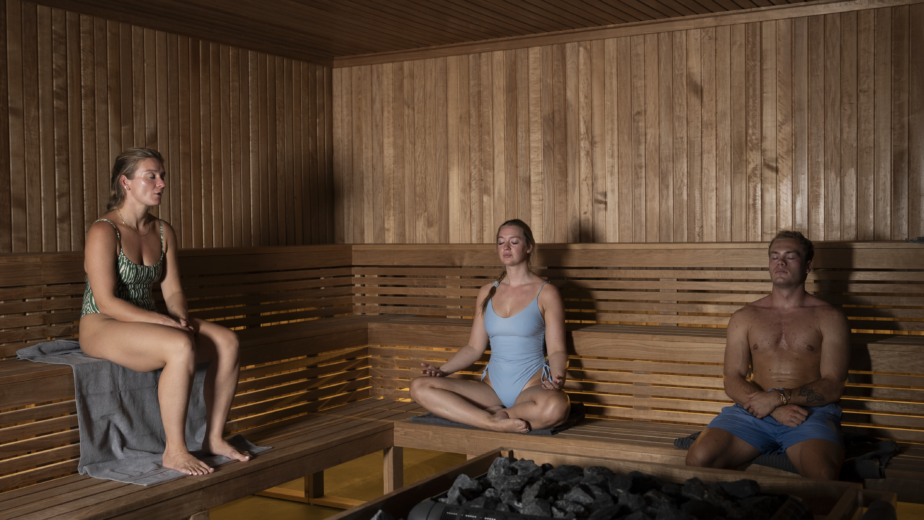
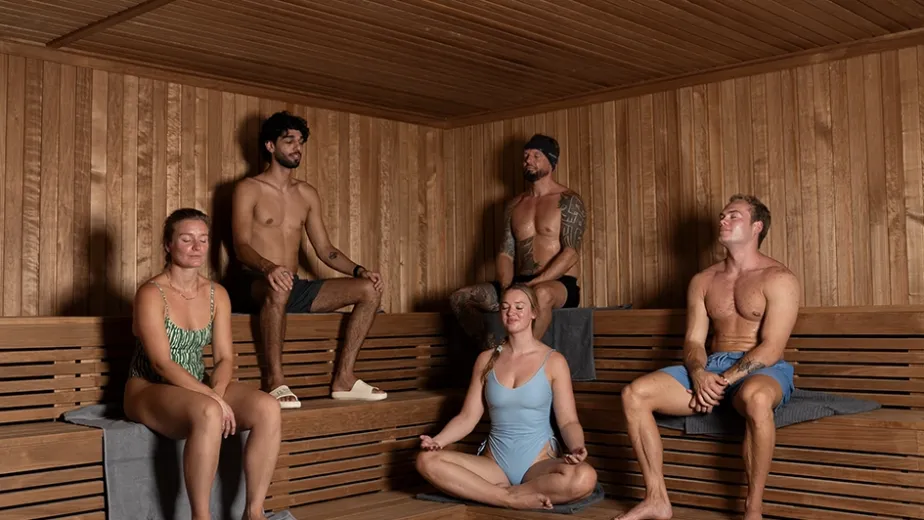
What travelled to Dubai is the core idea rather than the competition side of it. Heat is delivered in waves by a person whose job is to watch the room and time the pour, instead of being left to sit in the air for anyone to take at will. Pure Heat Club is built around that format, with three rounds of heat and cold, up to 30 guests in the room, and a facilitator leading from the first pour to the last door.
What a Traditional Sauna Session Usually Looks Like
A traditional sauna is a wood-lined room kept at a high, dry temperature. You step in, sit on a bench, and the heat settles around you within a minute or two. Nothing else happens unless you make it happen. There is no schedule, no music unless you bring some, and nobody in the room has a role to play. You stay until you have had enough and then you leave, and if there is a cold shower or a pool nearby, that is usually the end of it.
There is a lot to like about that simplicity, and it keeps a certain kind of regular very happy. A solo sit after training is easy to fit into a day, the room is quiet in a way most public spaces are not, and nothing is asked of you. For anyone who wants to sit with their own thoughts and leave when the thought is finished, the traditional room does the job with no fuss at all.
The limits show up over time. Most regulars settle into the same short routine of a few minutes in and out, because nothing inside the room suggests anything else. The heat is identical at the start of the session and at the end, so there is no shape to the hour, and cooling down is a shower if you are lucky. None of this makes the traditional format worse. It simply means the experience sits inside narrow bounds unless you already know how to push it, and most people never find out. Those limits are the reason the Aufguss vs traditional sauna question comes up at all.
What Changes Once a Facilitator Runs the Room
The clearest change is the clock. In a guided round you are not tracking anything, because the facilitator is. Sauna rounds run for ten to fifteen minutes, the cold plunge follows each one, hydration is built into the break, and the cycle repeats three times. You stop doing mental arithmetic about how long you have been sitting in there, and it turns out that mental arithmetic was a surprisingly large part of what made a normal sauna tiring.
A facilitator also reads the room in ways most people cannot read themselves. They watch how the group is sitting, notice when the heat has peaked, see who has gone quiet, and ease the pace or open the doors before anyone has to ask. In practice this works as a safety net as much as a performance. Beginners are looked after without being singled out, and regulars can push harder because somebody else is keeping watch.
The pace across the session is deliberate as well. The first round shows you what you are dealing with, the second settles the group into a rhythm, and the third is where everything comes together. That build is what makes a guided hour feel like a session with a beginning and an end rather than a stretch of time spent in a warm room. Once you have experienced both formats, it is the part of the Aufguss vs traditional sauna conversation that matters most.
How the Heat Arrives: The Pour and the Waves
The most visible difference in Aufguss vs traditional sauna appears the moment the pour begins. The facilitator takes water infused with essential oils and pours it over the hot stones, and aromatic steam fills the room. That steam is then moved through the space with a towel, so the heat reaches the back bench at roughly the same time as the front, instead of building up near the stove while everyone else hopes for the best.
The result is a rhythm rather than a flat temperature. Each pour lifts the intensity for a short stretch and then lets it settle, and a round moves through several of those lifts before the door opens. People who have used saunas for years often say this is the first time the heat felt like something with a shape to it. The aroma changes the character of a round as much as the steam does, and two facilitators can build completely different atmospheres from the same room.
Music is part of it too. Every round has a tone, set by the pour, the scent and the playlist, and the room tends to follow that tone without being told to. It sits closer to a short performance than to simply being warm, which is why regulars end up following particular facilitators around the schedule. If you want the longer explanation of the format itself, our guide to what Aufguss actually is covers the ritual from the outside in.
Aufguss vs Traditional Sauna: The Differences That Matter
Set the two formats side by side and the differences come down to a small number of places, though each one changes the experience completely. The first is who runs the clock. In a traditional sauna that is you, which sounds like freedom until you notice how much of the session you spend checking in with yourself about whether to stay a little longer. In Aufguss it is the facilitator, and your only job is to follow the round.
The second is how the heat is delivered. Traditional heat is dry and steady, holding more or less the same level from your first minute to your last. Guided heat is poured and pushed, so it arrives in waves that build across the round and across the session. The same room at the same temperature can feel like two different places depending on which of those two things is happening inside it.
The third is the shape of the hour. A traditional visit is open-ended, which is a strength on some days and the reason it fizzles on others. A guided session is built from three rounds inside roughly 75 minutes, with the cold between rounds and around 20 minutes of social time at the end. There is a beginning, a middle and a finish, and the finish is usually the part newcomers did not expect to enjoy as much as they did.
The last two differences in Aufguss vs traditional sauna are the cold and the company. In most buildings a sauna comes with a shower and not much else, so cooling down is an afterthought. In the guided format the cold plunge sits between rounds as a fixed step, with water and a few minutes to settle before the next heat. Traditional saunas are also often used alone or in pairs, while a guided session can hold up to 30 guests who move through the same rhythm together and end up talking afterwards.
The Cold Plunge Changes the Equation
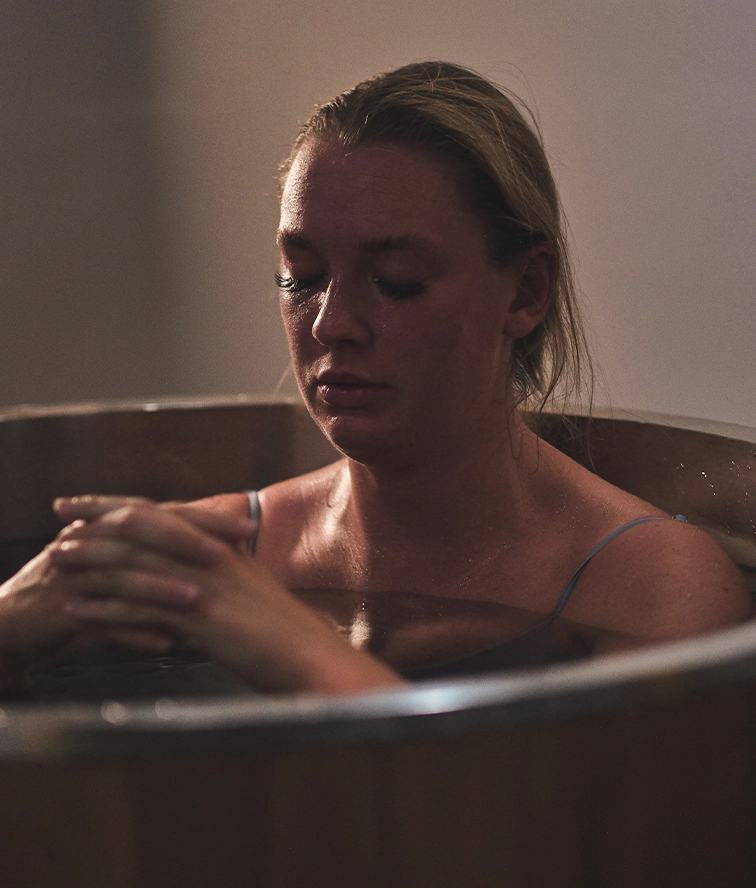
Cold water is easy to dismiss as a footnote until you have taken it directly after a hot round. The plunge is short and supervised, you enter at your own pace, and stepping out early is always allowed. What makes it different from a cold shower is the state you are in when you meet it. Your skin is warm, your breathing has already been worked by the heat, and the first contact cuts through everything else in a way that is hard to describe and easy to remember.
Practically speaking, the cold also closes one round and opens the next. It resets your attention, brings your breathing back down, and gives the session a clean hinge between cycles instead of one long stretch of heat that slowly becomes tiring. Hydration fits into the same break, which is why drinks are provided and why members drink more than they expect to. The cold is not a challenge bolted onto a sauna. It is half of the format, and it is the part of Aufguss vs traditional sauna that newcomers underestimate most.
First-timers usually ask two things about the plunge, whether they have to do it and whether they will manage it. The answer to the first is that the cold is part of how the rounds are structured, though how you take it is up to you. The answer to the second is that almost everyone manages it, because the facilitator walks you in and the opening seconds are the only ones that ask for any courage. Our guide to breathing through heat and cold goes into that in detail.
Three Rounds Instead of One Long Sit
Three rounds is not a marketing number, it is a pacing decision. One long sit in the heat becomes a test of patience, and one icy plunge taken from a standing start is a shock. Three rounds of heat and cold, with the intensity rising across them, give the session a progression you can feel without the whole thing turning into an endurance event. The first round is orientation, the second is the rhythm, and the third is the round people describe to their friends afterwards.
The rounds also make the session social in a way a solo sauna never is. When everyone in the room has been through the same three cycles, conversation afterwards starts easily. The 20 minutes of social time at the end are optional in name only, because most people stay, and it is consistently the part first-timers mention when they book a second visit. The mechanics of the structure are covered in our breakdown of how Pure Heat rounds work.
What Does Not Change
Heat still behaves like heat and your limits are still your limits. A guided session does not ask you to ignore either of those things, and anyone who has had enough of a round can step outside. Sessions run for around 75 minutes, guests are 18 and over, and beginners are welcome, which means the room on any given evening usually contains a generous mix of both.
The house rules do not change either. Swimwear is required, and the club keeps the guidance simple: swim shorts for men, and a two or three-piece or modest swimsuit for women. Towels, drinks, showers, toilets and lockers are all provided, so nothing about the session depends on what you remembered to pack. If you are the kind of person who plans ahead, eat something light an hour or two before and arrive hydrated, then keep drinking through the breaks.
Which Format Suits Which Person
Traditional saunas have a permanent place and nothing here is an argument against them. If you value quiet, if you like controlling your own timing, or if your ideal version is ten minutes of heat after a workout with nobody else around, the traditional room does exactly what you want. It is also the format most people in Dubai already have access to through a gym or a building, which counts for something.
Guided Aufguss tends to win over a different set of people. Anyone who finds a sauna dull after ten minutes, anyone who wants the cold but would rather not guess their way through it, and anyone who prefers being told what to do rather than arranging it themselves tends to prefer the facilitated version from the first round. Athletes often get the most out of it, because the rounds are timed, the cold lands at a fixed point in the cycle and the build across three rounds mirrors the shape of a hard training session.
Beginners usually do best with the guided format too, which surprises anyone who assumes more structure means more difficulty. The facilitator explains how the rounds work before the first pour, handles the pacing, and keeps an eye on anybody who looks like they are struggling. If you are weighing up Aufguss vs traditional sauna for your first real experience with heat, the guided version is the one that leaves less to chance.
Trying Aufguss for the First Time
Booking runs through the Pure Heat Club app, where the live schedule shows each session’s style and facilitator, so you can choose a time that fits and see how many spots are left before you commit. The club sits on the ground floor of the Mimoza Building in Arjan, and a full visit, including the social time at the end, takes around 75 minutes. Sessions are open to guests aged 18 and over, and pass packs can be used to hold spots for friends in the same session.
If it is your first time in any kind of sauna, say so when you arrive. The facilitator will walk you through the rounds, the cold and the exits before anything starts, and the format is built to be followed rather than figured out. Most first-timers spend the opening round working out what is going on and the second round enjoying it, which is exactly the order the session was designed around.
What is the single biggest difference in Aufguss vs traditional sauna?
Yes, and it is arguably the easier starting point, because the facilitator handles the timing and explains the rounds before the session begins.
Is Aufguss just a sauna with water poured on the stones?
The pour is where each round begins, not the whole format. What makes Aufguss different is everything around it: steam moved through the room with towels, timed rounds with the cold plunge between them, three cycles of heat and cold, and a facilitator reading the room throughout.
Is Aufguss hotter than a traditional sauna?
In the direct Aufguss vs traditional sauna comparison, temperature is the wrong thing to fixate on anyway. The difference is how the heat arrives, in waves of aromatic steam that lift and settle, and how the rounds are timed. Many people find a guided round feels considerably more intense than the same time spent in a steady, quiet room.
Do I have to take the cold plunge?
The cold is part of how the rounds are structured and it is what separates one round from the next. How you take it is your call: the plunge is brief, the facilitator walks you in, and stepping out early is always allowed. If you have any concerns, talk to the team before booking and they will walk you through what the session involves.
Can I try Aufguss if I have never used a sauna at all?
Yes, and it is arguably the easier starting point, because the facilitator handles the timing and explains the rounds before the session begins. Guests are 18 and over, beginners are welcome, and nobody in the room is scoring anyone’s performance.